ECN Electrical Forum - Discussion Forums for Electricians, Inspectors and Related Professionals

>> Home   >> Electrical-Photos   >> Classifieds   >> Subscribe to Newsletter   >> Store  
 

Featured:

 Electrical
 Clearance

 *
 Tools
 *

 Books

 *

 Test Equipment


Recent Gallery Topics:
What in Tarnation?
What in Tarnation?
by timmp, September 10
Plumber meets Electrician
by timmp, September 10
Who's Online Now
0 members (), 297 guests, and 15 robots.
Key: Admin, Global Mod, Mod
Previous Thread
Next Thread
Print Thread
Rate Thread
Page 2 of 2 1 2
Joined: Dec 2002
Posts: 1,254
D
djk Offline
Member
Paul,

I've seen the remenants of such a system .. looks a little bit like skirting boards (base boards) or heavy picture rail

If it's a public building, he's got to comply with current IEE regs I would assume.

I often find understated modern fittings can look far better in a very old structure anyway. They're less clunky looking.

[This message has been edited by djk (edited 11-29-2006).]

[This message has been edited by djk (edited 11-29-2006).]

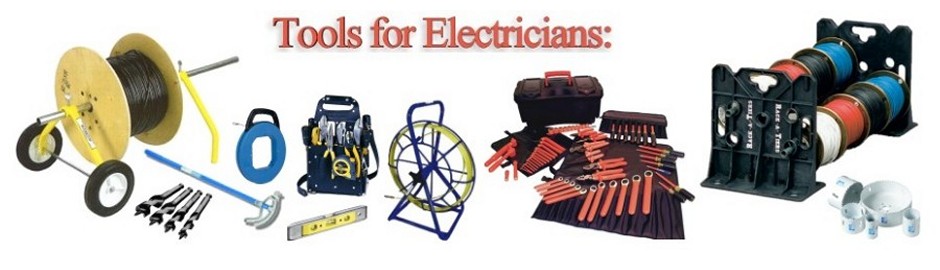
Wire Pulling Tools for Electricians

Wire Pulling Tools for Electricians, Installers & Maintenance Technicians

Joined: Feb 2003
Posts: 288
Y
Member
Quote
If a major electrical code such as the NEC still allows K&T to be used, then I think it would be hard to argue that the method is unsafe.

K&T is allowed only for extensions of existing installations, and elsewhere by special permission. In practice, I don't know many AHJs who would look favorably on this. Here in Texas, where I have seen K&T, it's usually limited to the attic, as there was one pull-chain fixture per room and no wall receptacles. Then you will see where receptacles were added in the 50s and wall switches in the 60s, and it's obvious by the type of romex used. It's just stripped back far enough for the romex conductors to reach the distance between K&T conductors. No, that's not the way the NEC says to do that transition, but that's how it's always done, and it will usually have been done fifty years ago.

K&T stopped being used quite a few years before the NEC adopted this restriction, because it is considerably more labor intensive to install than romex.

I read someplace that K&T is still allowed in flood-prone areas, since it dries out faster than other wiring methods.

Next time I'm in Fredericksburg, I'll take pictures of the only modern K&T installation I've ever seen. It's in a former feed store turned brewpub. It uses #8 THHN, and obviously aims for that antique look. The reason #8 is used becomes evident with a close look at the bulbs: 12V. They are fed from 12V isolation transformers. Apparently, that's what it took to get the AHJ to approve the job.


Joined: Aug 2001
Posts: 7,520
P
Member
Quote
K&T is allowed only for extensions of existing installations, and elsewhere by special permission. In practice, I don't know many AHJs who would look favorably on this.
I was wondering just what sort of circumstances would be considered for that special permission to be granted.

Whether by special permission or an extension to an existing circuit though, am I correctly interpreting 394.10 to mean that the conductors may not be exposed to view, other than in an attic or unfinished basement?

In other words, just running K&T wiring along the ceiling or wall of a living room (which is what the original point seems to be suggesting) so that it's clearly on view would not be acceptable?

Joined: Feb 2003
Posts: 288
Y
Member
Quote
In other words, just running K&T wiring along the ceiling or wall of a living room (which is what the original point seems to be suggesting) so that it's clearly on view would not be acceptable?

If it is concealed, it is K&T and subject to Article 394. If it is exposed, it is "open wiring on insulators" and subject to Article 398. Other than that, I'm not sure what differences there are. I do know I have old books showing exposed K&T or open wiring on ceilings of commercial buildings, suggesting that was the right way to do it. I'd say it was rarely left exposed in residences (other than in basements and attics), because it's ugly and catches dust.

Joined: Aug 2001
Posts: 7,520
P
Member
Quote
If it is exposed, it is "open wiring on insulators" and subject to Article 398.
Good point. 398.10 seems to rule out use in residential wiring.

Joined: Dec 2002
Posts: 1,254
D
djk Offline
Member
The rules here appear to totally rule it out in any residential or business environment.
Double insultation requirements on all cables etc.

Industrially, you would be required to have all sorts of very serious enclosures around any live exposed conductor e.g. bus bars and I'm sure that K&T would be the same.

You see exposed conductors though on those 12V (SELV) halogen lamp fittings i.e. the ones that are pegged onto wires across the ceiling etc
Decorative type things.

[This message has been edited by djk (edited 12-02-2006).]

Joined: Dec 2001
Posts: 2,518
Likes: 1
T
Member
I'm not that sure it would be illegal here... the typical wire used back then had a double insulation of rubber and cloth, placing it into the same boat as cloth covered iron cords and similar stuff. The typical twisted cord I pictured above is still sold by some companies, the only thing I'm not sure is whether it would be allowed for permanent fixed wiring.

Wire Pulling Tools for Electricians

Wire Pulling Tools for Electricians, Installers & Maintenance Technicians

Page 2 of 2 1 2

Link Copied to Clipboard
Powered by UBB.threads™ PHP Forum Software 7.7.5