Stacked rod? Que?
Oh by the way... A tree fell on the drop that fed the garage, ripped whole service off building, and being replaced new en toto. (With new ground)
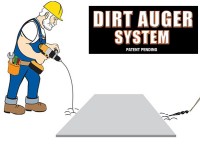
I did mean a sectional ground rod. I use the tapered rod couplers so that I only need to carry the less expensive copper weld rods that are not threaded. You just drive the first rod, place the rod coupler on top, insert the second rod into the rod coupler, and drive it to near flush, test and repeat until the desired resistance is reached. I use an electric jack hammer and a ground rod cup to do the driving.
In answer to Iwire's why.
The reason that I go for an actual measured resistance of twenty five ohms or less is in the hope of reducing the likelihood of surge and spike damage. I began doing that after a summer camp hired me to stop the destruction of their telephones, answering machines, fax machine, and so forth. I ordered protective devices and while waiting for them to be shipped I worked on the grounding. After getting the affected buildings grounded to less then twenty five ohms all of the equipment damage ceased and the staff declared me a hero. The camp is located on a ridge line in Virginia and gets lightning during most of the camping season. They weren't experiencing direct strokes to the buildings or wiring but they were going through telephone and electric control devices at several a week. I was not able to drive deep rods there so I installed ground rings and interconnected all of the separate building grounding electrodes using buried bare number two copper trenched to a five foot depth.
I got my sectional rod experience back when I was in the Air Force. I drove ground rods for telegraphic fire alarm signalling. The grounds had to be good enough to signal over with a 100 milliampere signal current in the event of a broken wire. Some of the alarm station rods went to forty feet in order to get a good ground return signal. There we used threaded sectional rods and the base had a nifty hydraulic drill to drive them. I haven't seen anything like it since. It actually drilled the threaded rods into the earth turning them as they were hammered. I wonder if a Jacobs chuck adapter on a large hammer drill would accomplish the same thing.
--
Tom Horne