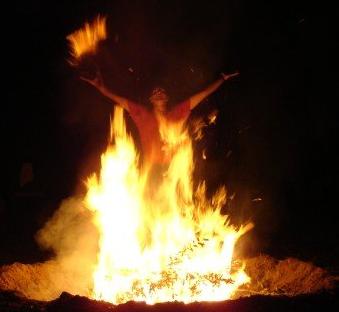
Hi Mike, it's definitely no smoke. I took the photo into the light which is not ideal, some over exposure did occur.
Re the discussion of the Hotwater controls.
Generally in Auckland the hotwaters are controlled by the pilot system, which is basically a controlwire which operates at the meterbox a relay or contactor, to switch on or off hotwater, spa pools, fixed wired electrical heaters. It's used for demand control mainly over the peak periods 1700 - 1900 hrs in the winter period, sometimes early mornings on very cold days.
This extra wire is controlled from the substations, and as an extra wire via overhead or underground brought into the premises for the load management.
Also the ripple or Zellweger plant is used which provides a 1050 Hz signal superimposed over the mains and controls a ripple relay on or off.
This system is more used in the outer suburbs or rural area's because of the costs of running the extra pilot wires.
The third sytem used in Warkworth and Wellsford is the GEC Cyclo system which switches at the zero crossings where a cyclo relay detects the code and controls a load on or off.
In New Zealand we can't tap in an external grid from Australia or take advantages of time differences, like in the U.S. so it is essential that loads can be dropped off quickly. The pilot system has the advantage that the loads can be dropped immidiately in case an important generator is lost and the frequency drops below 49.7 Hz.
All the substations have an under frequency relay which can dump hotwater normally and sometimes streetlights loads in extreme circumstances to avoid having a blackout.
The two rate metering tariff was introduced in the early 1990's to provide a cheap night rate for hotwater heating and storage heating, the night rate was about 4½ cents while the day rate was around 9 cents / kWh, a little higher than the standard day rate of 8.26 cents / kWh.
Now these days it's hardly worth while anymore because greed through privatisation made the tariffs for day and night about 1 cent apart.
Control was done by quarz operated timeclocks on the meter and one for the hotwater cylinder.
These had their fair share of problems too, and made me a lot of OT for call outs for stopped clocks over the weekends.
Regards Raymond